
The guest of the show 'And Now the Government' was Minister of Economy Ante Šušnjar. He emphasized that the Government carefully monitors the energy market, ensures legal oil transport and monitors price increases in order to protect consumers and the economy.
17:27 / 11.03.2026.
Author: Branko Lozančić
Šušnjar: More efficient Rijeka refinery key to energy market stability

Author:
Branko Lozančić
Published:
March 11, 2026, 17:27
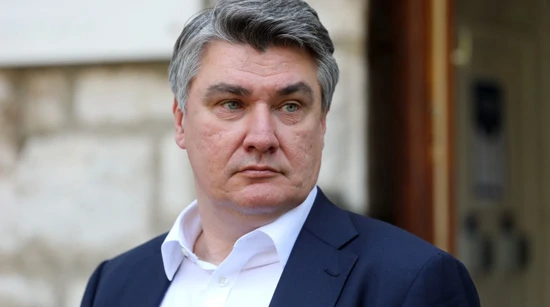
Economy Minister Ante Šušnjar
Foto: Goran Stanzl / Pixsell
“Europe, including Croatia, has a ready response to the energy shock caused by the war in the Middle East,” said Minister of Economy Ante Šušnjar.
“On Monday, we adopted measures and intervened promptly in order to protect both citizens and the economy from possible shocks in the prices of oil products. Croatian citizens are always in our focus. That has always been the case and will remain so,” said Šušnjar.
He added that the measures were precisely measured and that everyone involved is satisfied.
“Distributors are satisfied, citizens are satisfied, and the economy is satisfied. Neighboring countries have even contacted us to ask how we have measured this so well that everyone is satisfied,” he said.
Šušnjar also emphasized the global context.
“In turbulent times, we are part of the global world and global supply chains. When the situation in Iran causes a disruption in supply on the world market, we cannot be isolated, and prices are formed based on stock market quotations,” he said.
Speaking about the current market situation, he said that the stock markets are stabilizing to some extent.
“In the last two days, we have seen that the markets are calming down a bit when it comes to oil. The regulation we have is applied for the next 15 days, and after that we will monitor the development of the situation and know how to react,” he explained.
He emphasized that the Government is ready to take additional measures if necessary.
“We have a number of other measures that we can intervene with. We hope that there will be no need, but if that happens, we will try to protect citizens and the economy, but also market stakeholders in the energy sector, so that they can live and work in as normal circumstances as possible,” he said.
Šušnjar: Modernized Rijeka refinery increases security of supply
Šušnjar emphasized that the modernization of the Rijeka refinery marks a significant step in ensuring the energy security of Croatia and the region.
“I am glad that we have completed it and that we have reached the moment when the refinery starts operating at full capacity. Although the start-up period is still short, these are sensitive structures and plants that need to be put into operation very carefully - it is functional here,” said Šušnjar.
He added that the modernization, with investments in the LNG terminal on the island of Krk and other supply routes, serves not only Croatia, but also its neighbors and partners.
“We did this for the sake of our neighbors and partners, in order to provide them with diversification routes and security of supply,” he explained.
Šušnjar emphasized that the modernization increases the efficiency of the refinery.
“This process will enable us to obtain 30 percent more final products from oil refining - diesel, gasoline, gases and jet fuel. There will be less heavy residues, and the efficiency of the refinery is increasing, which is good for the co-owners and the profitability of the plant itself,” he said.
Asked whether the refinery will produce enough derivatives for Croatian needs, Šušnjar pointed out that the capacities will exceed domestic needs.
“It already has capacities above Croatia's needs,” he emphasized. “So far, we have predominantly supplied the market of Bosnia and Herzegovina, which largely depends on our derivatives, as well as the Slovenian market and the wider region. The refinery primarily meets the needs of Croatian citizens and the economy, but it also enables us to export to neighboring countries,” he said.
He added that countries like Slovenia and Bosnia and Herzegovina do not have their own refineries, and that they rely on the Rijeka refinery.
“In addition, there are oil traders who import via the Mediterranean and our ports, but the refinery and the refinery business remain key to the stability of the Croatian and regional markets. It is a kind of system of interconnected vessels,” concluded Šušnjar.
Šušnjar: JANAF ensures stability of supply, there is no abuse
In the context of recent reports to the European Commission's Directorate-General for Competition by Hungary, which claims that JANAF is abusing its monopolistic position, he emphasized that the security of oil supply for Croatia and the region is not in question.
“Decisions will be made when the time comes. So far, measures have been taken to ensure that the cargoes that have arrived at JANAF are transported safely. These are cargoes of non-Russian origin. We have no announcements for the transport of Russian oil, nor documentation that would grant them an exemption for a year, which Prime Minister Orban allegedly agreed with Trump,” he said.
He stressed that the Government and JANAF are acting in accordance with the rules of the European Commission and the US OFAC and that there is no abuse of the monopoly position.
“This is about security of supply, not abuse. JANAF ensures that everything goes according to the rules and that the market is stable,” he said.
The minister also explained the procedure for transporting oil to Serbia.
“The oil that was transported was of non-Russian origin, but it had to obtain licenses. First, the Serbian Oil Industry obtained its licenses, and then JANAF received approvals from the US administration through OFAC. As a conscientious state, we are obliged to check compliance before each delivery. We cannot risk sanctions or loss of access to SWIFT,” he explained.
He concluded that all decisions will be made responsibly, while preserving the stability of supply.
“We check all compliance and only then make decisions. JANAF will not risk its business, and security of supply remains a priority for Croatia and the region,” he said.
"Energy market under control"
Asked about the rise in energy prices, in the context of a potential increase by private individuals, the minister pointed out that private individuals legitimately strive for profit, but that the state has a role in regulating the market and preventing abuses.
“The interest of private individuals is profit and it is legitimate that they strive for maximization, but that is why the state is there to regulate certain things,” he said.
He also emphasized that there is no significant room for inventory manipulation.
“There are no large reserves in the winter period. Distributors of energy products only have supplies for a few days, because they nominate their quantities a month in advance to large customers, who close their positions by paying the agreed prices,” he explains. “From time to time it happens that some customers withdraw a little more than they planned, but that is their job in the trading segment and it is not significant in our market,” he stated.
The Minister concluded that at the moment it is not a question of extra profits or abuse of stocks, but that the Government is carefully monitoring the situation and is ready to intervene if necessary.
“Economic theory and science explained it, when prices go, they go like a rocket, and when they come back, they come back like falling feathers,” he concluded.
Source: HRT
Vijesti HRT-a pratite na svojim pametnim telefonima i tabletima putem aplikacija za iOS i Android. Pratite nas i na društvenim mrežama Facebook, Twitter, Instagram, TikTok i YouTube!







Autorska prava - HRT © Hrvatska radiotelevizija.
Sva prava pridržana.
hrt.hr nije odgovoran za sadržaje eksternih izvora