
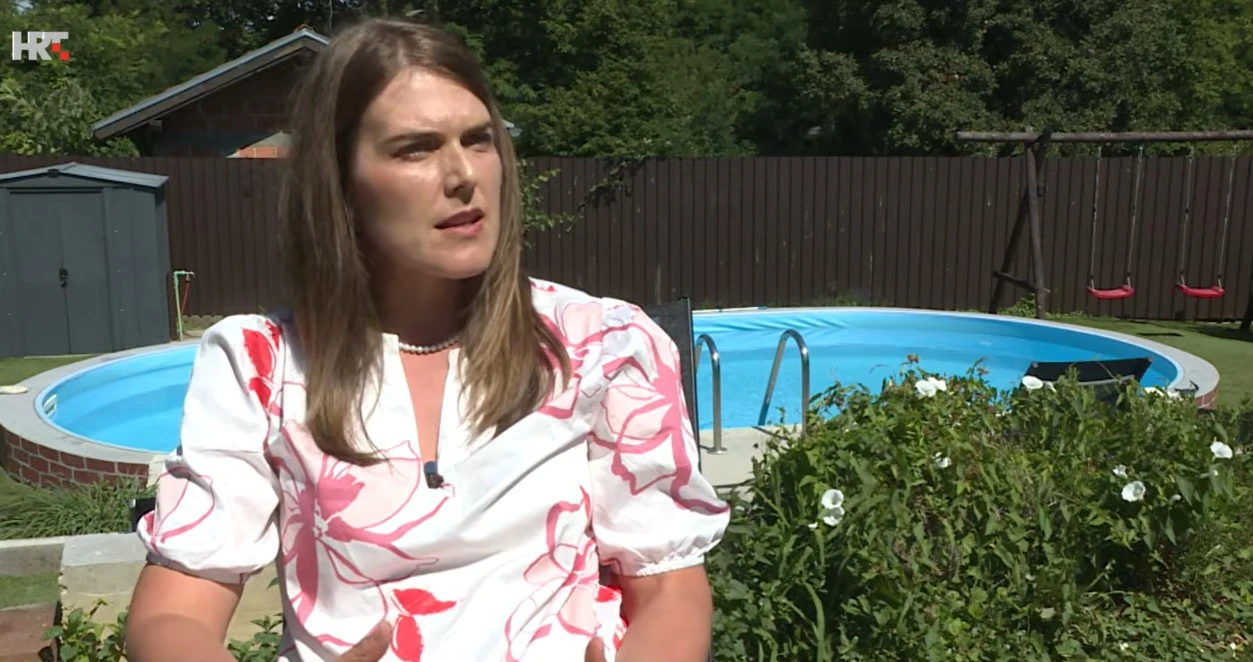
The daughter of Croat Franjo Soldo and an Afrikaner woman grew up in a country of rich and complex history. Now, the time has come for a new chapter. Nadia Soldo, with her children Danijel and Živana, set off on a journey across continents so they could experience the land of their ancestors together.
17:30 / 18.09.2026.
Author: Ivana Perkovac/B.NJ./Glas Hrvatske
The blend of African spirit and Croatian heart marked the childhood of Nadia Soldo
Author:
Ivana Perkovac/B.NJ./Glas Hrvatske
Published:
September 18, 2026, 17:30
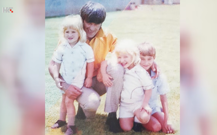
Nadia with her children and father
Foto: Family archive / -
His life began with a one-way ticket—to the Republic of South Africa. A country where he was drawn by double the wages and half the cost of living, but where he was met by the politics of apartheid and a completely different reality from the one he knew.
“He came to Africa and I think it was very difficult for him. It was a period of great political instability in South Africa, along with strong segregation, so foreigners weren't really accepted. My dad was a very mild and gentle person. I think all of that was hard for him to accept. And the immigration experience itself was difficult,” says his daughter Nadia Soldo.
Unanswered questions
Her father did not speak much about his past. She only knew that he grew up between Herzegovina and Slavonia, and then, like many at the time, headed out into the world. But where did he actually come from? From what kind of family, what kind of circumstances, and what kind of life story? For years, the questions remained unanswered. Until she decided to look for them herself.
“So, when I was nineteen or twenty years old, about 27 years ago, I decided to come to Europe. I thought: "I'm going to visit family." I couldn't have known what I would find there. In the end, I met the rest of the family in Slavonia and Herzegovina. I sat with them and suddenly realized that this was the part of my identity I hadn't known for so many years. It was beautiful. It was like I had found hidden treasure. I realized it was like a puzzle piece that had been missing the whole time. It fit perfectly into who I am. Into that spontaneous side of me that likes to be goofy. That's when I realized: that's me,” Nadia reveals.
Meeting the family changed her perspective. It gave her a sense of belonging. Only then did she understand the pain her father carried when he left, but also what he brought with him from his homeland. Those beautiful rituals that filled their days, like lingering over a cup of coffee. That is the part of Croatia he brought to the far south of the African continent, so different from everything he had known until then.
“South Africa is a developing country. There are major differences in the way business is done as well. There is a middle class and a wealthier part of the population, but also a very large number of people living in extreme poverty. The infrastructure is also quite different from what you have here in Europe,” she explains.
He married an Afrikaner woman who spoke Afrikaans. “Growing up between two cultures was not always easy,” she admits, “but later you realize that it has made you richer.” She wants to pass this on to her children as well.
“That was a gift. I told them that my dad left them Croatian passports. That is a gift. But it's not just about a piece of paper. They loved my dad very much. They grew up by his side. And that's exactly why I don't want them to forget. I don't ever want them to forget that their identity is not just a piece of paper. It's something you carry inside you. You need to accept it. You need to feel it. Make it a part of yourself.”
Galerija
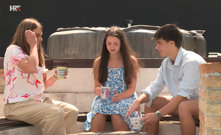
Her son, Živan Vermaak, recalls how he got to know Croatia by watching his grandfather and his relationship with people.
“He used to prepare Croatian dishes for us. And through those dishes, we got to know a part of Croatian culture. Almost every day we learned new Croatian words. We watched the World Cup together. He cheered with us. We followed the Croatian national team. That's why we always felt a connection to Croatia. And when we finally came here, that's when we saw with our own eyes everything he used to tell us about. The way he lived became a reality right before us.”
His sister, Danijela Vermaak, is delighted by the warmth of the Croatian people.
“They accept you immediately and are ready to give their all. People are generous. And family is simply family. It doesn't matter if you are fifth cousins, everyone accepts you and includes you in everything happening around you. You immediately feel like you belong.”
“Every day, when we went to school, we would say: "Bok, dida, vidimo se poslije" (Bye, grandpa, see you later). "Laku noć, vidimo se sutra" (Good night, see you tomorrow). And so it went every day. But the most important phrase I will always remember is "daj snage" (give me strength). That is something I always remember. When times were tough for me, dida would always tell me: "Daj snage." When I came to Croatia, that phrase took on a much deeper meaning. We visited Vukovar and Herzegovina and saw what Croatians fought for and what is truly important to them. Only then did I understand where that "daj snage" comes from.”
Going in search of the place where Dida was born
It took strength and courage to travel from a small Slavonian town to a beautiful but dangerous country. But also the other way around. To go in search of the place where their father's heart remained.
“My dad is buried in Vetovo. He wanted to return. He always belonged here. He wanted to come back. I told him: "No problem, we will come. Don't worry,"” Nadia recalls.
“I told him we miss him so much. And he wanted to come back too. I told him what kind of experience this was for me. I love you so much, I told him: I love you so much,” Danijela says wistfully.
“When we came here, we felt like we were returning home. Dida always said he wanted to return to Croatia. He wanted it so badly. When I came to his grave, I thought: I am by your side. This is that moment. I am by your side, dida. I love you so much,” Živan says with nostalgia.
Danijela and Živan see their future in Croatia, the country they come from. Their wish is to enroll in a Croatian language summer school, and later perhaps university. And to learn as much as possible about "the land of their dida".
"Do not let your Croatian heritage be just a piece of paper"
To conclude the interview, Nadia has a message for all Croatians living abroad, far from their homeland.
“Do not let your Croatian heritage be just a piece of paper. Come. Feel it. It won't just find you. You have to take that step. Open your treasure chest. Find your family. Come meet your history. Be proud. And you will find it.”
Source: Voice of Croatia
Translated by Branko Lozančić
Vijesti HRT-a pratite na svojim pametnim telefonima i tabletima putem aplikacija za iOS i Android. Pratite nas i na društvenim mrežama Facebook, Twitter, Instagram, TikTok i YouTube!


Autorska prava - HRT © Hrvatska radiotelevizija.
Sva prava pridržana.
hrt.hr nije odgovoran za sadržaje eksternih izvora