
At the landmark Suzzallo Library at the University of Washington in Seattle—which was named the third-best public university in America and the twelfth-best in the world this year—the documentary exhibition "Behind the Name of the Library: Henry Suzzallo and his Croatian Roots" by author Branka Bezić Filipović has officially opened. The exhibition also marks the beginning of the program celebrating the centennial anniversary of the library that bears the name of Henry Suzzallo, one of the most prominent presidents of the University of Washington, a man whose early 20th-century reforms left a permanent mark on American higher education.
17:50 / 25.10.2026.
Author: Branka Bezić Filipović
A Croatian Story in Seattle: An Exhibition on the Roots of Henry Suzzallo
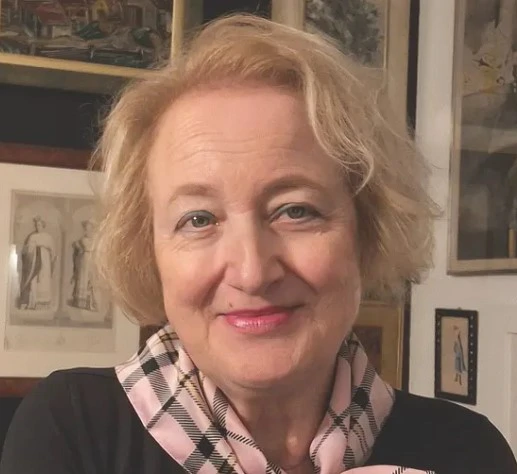
Author:
Branka Bezić Filipović
Published:
October 25, 2026, 17:50
Suzzallo Library
Foto: Courtesy of / Personal archive
It is little known that Henry Suzzallo was the son of Croatian immigrants. His father, Petar Zucalo, was born in Grebci near Dubrovnik, and his mother, Ana Zucalo, in Boninovo. Their life story began in Dubrovnik, continued in California, and reached its peak in Seattle, where their son became one of the most influential figures in the history of American higher education.
After their wedding, Ana and Petar Zucalo settled in Northern California, where Petar continued the life he had started back during the California Gold Rush. Members of the Zucalo family soon entered the hospitality business in the city of Placerville, formerly known as Hangtown, one of the most famous settlements of the Gold Rush era. The city originally bore a name that recalled its turbulent and lawless beginnings and the public hangings carried out there. In 1867, Petar Zucalo, along with two partners, opened the Adriatic Restaurant, while his cousin Nicholas Zucalo ran the Union Restaurant in the prestigious Union Hotel in 1893. The Zucalo family was thus counted among the first Croatian immigrants who successfully built their place in Northern California's hospitality industry after the Gold Rush. (According to: Branka Bezić Filipović, Od prvog prebivališta do vječnog počivališta, Naklada Bošković, 2017.)
However, success did not last. Illness and financial difficulties forced the family to relocate to San Jose, where their son Anthony Henry Suzzallo was born on August 22, 1875. He was the eighth of nine children, though only four lived to adulthood. Growing up in the modest circumstances of a Croatian immigrant family, Henry Suzzallo showed an exceptional talent for learning at an early age. Thanks to his academic capabilities, he built an enviable university career and established himself at Columbia University as one of America's most promising experts in the field of education. In 1912, he married Edith Moore, the niece of a prominent Seattle family, further strengthening his ties to the city of Seattle.
When the University of Washington began its search for a new president in 1915, Suzzallo's scientific excellence, visionary understanding of higher education, and the reputation he had already earned in academic circles made him the best candidate. His appointment marked the beginning of one of the most significant periods in the history of the University of Washington. Over the following years, he implemented far-reaching reforms, encouraged the development of scientific research, and built a modern university that became one of the leading institutions in the United States. His contribution was so immense that today his name is carried by the monumental Suzzallo Library, one of the most beautiful and recognizable university libraries in America.
It was precisely this search for Henry Suzzallo's Croatian roots that grew into an international research project, ultimately leading to this exhibition. It all started at the Episcopal Archives in Dubrovnik, where young archivists Petra Bianki Pujo and Antun Koncul discovered valuable documentation regarding the Zucalo family. Among the discovered documents, a special place belongs to the episcopal dispensation for the marriage of Petar and Ana Zucalo. Since they were third-cousins, they had to obtain special permission from the Bishop of Dubrovnik to marry. These documents, along with excerpts from the parish registers, are being presented to the American public for the first time at this exhibition.
The research then continued at the State Archives in Split, where the author made one of the most valuable discoveries of the entire project: eleven letters written by Henry Suzzallo between 1916 and 1930 to his friend Simon Skalabrin, a prominent Croatian immigrant in Seattle. These letters are much more than ordinary private correspondence. They reveal the thoughts of a man who led one of the largest American universities, as well as his deep emotional connection to his parents' homeland. In them, Suzzallo confirms that his family originates from the maritime Republic of Ragusa (Dubrovnik), speaks about his interest in Croatian and South Slavic affairs, and admits that, although he is an American by birth and allegiance, he feels a "deep family and sentimental attachment" to the land of his ancestors.
The letters also testify to a long-standing friendship between Henry Suzzallo and Simon Skalabrin that lasted at least fourteen years. Through them, one can trace the political events after World War I, discussions about the future of the Yugoslavia of that era, Suzzallo's journey to Dubrovnik and Zagreb in 1928, and his thoughts on the position of Croats and other South Slavic peoples. This is an exceptionally valuable historical source that sheds new light not only on the life of Henry Suzzallo but also on the activities of the Croatian community in Seattle at the beginning of the 20th century.
To make the story as complete as possible, the author visited Grebci, the birthplace of Petar Zucalo, photographed sites connected to his family, and continued researching their life path after their arrival in the United States. The data gathered during this research connected the Croatian period of the family's life with their American success, showing just how long and thorny the path was from a small village near Dubrovnik to the very top of the American academic world.
The result of this work today is an exhibition that reconstructs—through original documents, photographs, family trees, marriage register excerpts, personal letters, and other sources—the life journey of a Croatian family whose son became one of the most important figures in the history of American higher education. The exhibition is not just a story about Henry Suzzallo. It speaks of the Croatian diaspora, of people who left small Dalmatian towns for the world and left a mark far from their homeland through their hard work. At the same time, it shows how many still-unexplored stories are preserved in archives and how much international cooperation can contribute to uncovering them.
The opening of the exhibition gathered representatives from the University of Washington, members of the scientific and cultural community, members of the Croatian community, and numerous guests from Seattle and the state of Washington. The original documents found in Croatia sparked particular interest, revealing to many visitors for the first time that the man whose name has been carried by one of the most beautiful American university libraries for a century came from a Croatian family.
Addressing the attendees, the author emphasized that this research showed how history often hides stories waiting to be rediscovered. "Finding a single document is always a great pleasure, but finding a whole story is a great life satisfaction. This exhibition is proof that Croatian cultural heritage has its place even in the world's most prestigious academic institutions, and that the stories of our emigrants can still connect countries, cities, and people today."
Over the coming months, the exhibition will be available to students, professors, and visitors of the University of Washington, remaining a permanent reminder of Henry Suzzallo's Croatian roots and the contribution of Croatian immigrants to the development of American society. At the same time, it represents another confirmation that dedicated research work can connect archives, universities, and two countries, telling a story that was little known to both Croatia and America for nearly a century.
Source: HRT
Vijesti HRT-a pratite na svojim pametnim telefonima i tabletima putem aplikacija za iOS i Android. Pratite nas i na društvenim mrežama Facebook, Twitter, Instagram, TikTok i YouTube!


Autorska prava - HRT © Hrvatska radiotelevizija.
Sva prava pridržana.
hrt.hr nije odgovoran za sadržaje eksternih izvora