
Dalma Rojas, a Bolivian woman of Croatian descent, visited Croatia, the homeland of her great-grandfather, once again after several years. On this occasion, she arrived as a representative of the Croatian youth from Bolivia, Ecuador, and Peru to the Council of Young Croatians Outside the Republic of Croatia.
17:18 / 31.10.2026.
Author: David Rey/B.NJ/Glas Hrvatske
A Bolivian Woman Visited the Homeland of Her Great-Grandfather
Author:
David Rey/B.NJ/Glas Hrvatske
Published:
October 31, 2026, 17:18
Zagreb airport
Foto: Rojas family / -
“Croatia occupies a very special place for its descendants: it is a great myth. In my case, it is a living memory that survives within my family. In July of this year, I had the opportunity to visit it, specifically the city of Zagreb. This visit was possible thanks to my participation in the constitutive session of the Council of Young Croatians Outside the Republic of Croatia. What I experienced was much more than an institutional event; it was a reconnection with my roots and a confirmation that the Croatian identity is alive in many corners of the world.
Nevertheless, with great pleasure — and as part of my mission — I adjusted my schedule to spend time with other descendants outside the event itself. I met with friends who are attending the Croaticum program and have decided to settle and work in the capital. They were kind enough to host me, and living with them allowed me to learn firsthand what return truly entails: a well-thought-out decision that balances professional opportunities and quality of life with the desire to reconnect with the homeland of one's ancestors.
In La Paz, I also nurture that connection with Croatia. Within the Croatian community, I participate in performing traditional Croatian dances, both at events organized by the community itself and at those open to the general public. Currently, we are meeting with interested individuals to establish a permanent dance group in La Paz. I also participate by preparing Croatian dishes for various events or for our gatherings where we learn recipes. At events within our community, mađarica, fritule, and soparnik are the most sought-after. In addition, I attend a Croatian language course and participate in other activities, such as celebrations of national holidays, Christmas events, or gatherings to watch the matches of the Croatian national football team,” states Dalma Rojas.


Zagreb - Dalma and Lucía Salinas
Foto: Rojas Family / -
Dalma's Croatian family originates from the island of Vis.
“In 2020, I visited my Croatian family. They welcomed me into a beautiful home, filling my heart with tenderness and my stomach with delicious food. This gave me an opportunity to compare the different rhythms of life in the north and the south; although Zagreb has an urban, formal character, it is simultaneously peaceful and welcoming.
I enjoyed getting to know a different rhythm — polako (slowly): without any rush, completely enjoying the moment. Interestingly, I recognized that same rhythm in Bolivia. In the south of the country, life is also more relaxed, and people spend their days cultivating vineyards. And this is no coincidence: it was precisely the Croatians who brought grapevines to southern Bolivia.
It was not a deliberate attempt to introduce grapevines to that region; on the contrary, after the crisis caused by phylloxera — which destroyed more than 60% of vineyards in Dalmatia at the end of the 19th century — many farmers, primarily from the island of Brač, emigrated to Bolivia, bringing their winemaking knowledge with them. In valleys like those in Tarija and Samaipata, this tradition took root. Today, almost 80% of Bolivian grapes are produced in Tarija — points out the Bolivian woman of Croatian descent.
Galerija
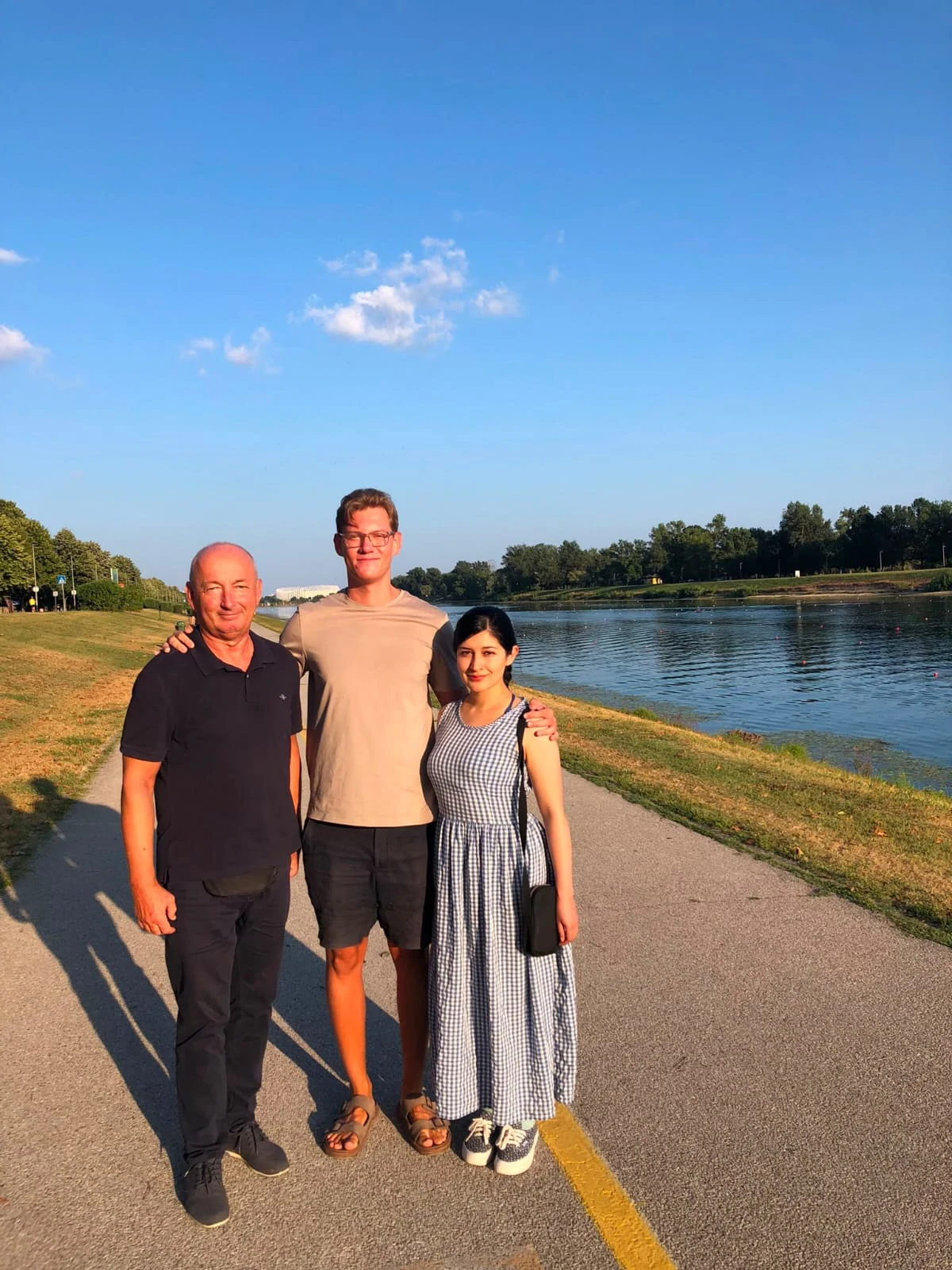

Dalma had an important meeting with Croatians who provide support to the Hispano-American community regarding residence documentation and integration processes.
“I was surprised to learn that most of them speak perfect English, and many speak Spanish fluently as well. They also told me that the majority of the participants in the Croaticum program are South Americans and that they have formed strong friendships with them. Getting to know these successful examples of return migration helped me understand their real motives: cultural roots, professional opportunities, and the warmth of a kindred people.
After thoroughly exploring the city of Zagreb, I decided to head to its surroundings and visit Samobor and Karlovac. With its fairy-tale-like atmosphere and famous kremšnite, Samobor enchanted me with its serene vibe. Karlovac, for its part, charmed me with its star-shaped layout and imposing fortress, built to protect the border of the Empire. Walking along its ramparts felt like a journey through time; it was an opportunity to experience the spirit of a region that, with unwavering determination, managed to defend its identity.
I also visited Zagreb's Lake Jarun, walked along the shore, and watched the locals enjoying sports and nature. And every break, of course, was a perfect excuse to sit down with friends, have a coffee, and talk about life.
Returning to Croatia, even if only for a few days, is like returning to a place that has always been with us; for those of us who were born very far away, yet grew up hearing its name — concludes Dalma Rojas.

Dalma with her family
Foto: Rojas family / -
Vijesti HRT-a pratite na svojim pametnim telefonima i tabletima putem aplikacija za iOS i Android. Pratite nas i na društvenim mrežama Facebook, Twitter, Instagram, TikTok i YouTube!


Autorska prava - HRT © Hrvatska radiotelevizija.
Sva prava pridržana.
hrt.hr nije odgovoran za sadržaje eksternih izvora