
Sutivan was built on the foundations of the ancient basilica on Bunta, over which the church of St. John the Baptist was built and for which the place got its name.
07:08 / 24.11.2017.
Author: Tatjana Rau
The hometown of the first Croatian to emigrate to Bolivia

Author:
Tatjana Rau
Published:
November 24, 2017, 07:08
Stari natpis na pročelju Kavanjinova ljetnikovca iz 1704. godine (Foto: Tatjana Rau/Glas Hrvatske)
Foto: - / Glas Hrvatske
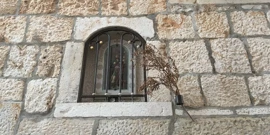
The old inscription on the facade of the 170-year-old Kavanjin Mansion—a protected monumental complex awaiting reconstruction—states: “Ostivm non hostivm” (friend, not enemy). Under that slogan the doors to this manor have long ago been opened to the people of Sutivan by this distinguished nobleman, lawyer and great baroque poet, Jerolim Kavanjin from Split.
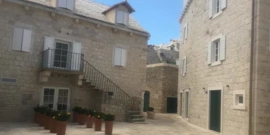
Today, the Sutivan municipality presents this place as a blend of culture, tourism and sport. The renovated old building attract visitors with its classic local white stone and the romantic fish pond nestled within the narrow houses, which perfectly blends the spirit of the past with that of today. Sutivan's architectural heritage is in the first place among the municipality’s reconstruction projects and fits perfectly into the tourist offer which gives this town a great advantage over the other towns on the island of Brac.
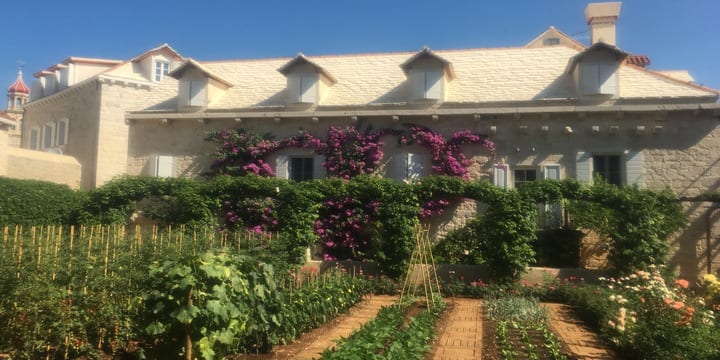
Three families have left an indelible mark on Sutivan’s culture and economy: Kavanjin, Definis and Ilić. While Kavanjin's Mansion awaits reconstruction through a European Union project, the Definis' Palace and Ilić's Palace have been completely renovated and incorporated into the town’s tourist offer. Ilić's Palace is a privately owned luxury hotel—and the only hotel in Sutivan—while the other is dedicated to family accommodation.
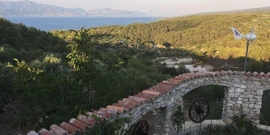
Sutivan was built on the foundations of the ancient basilica on Bunta, over which the church of St. John the Baptist was built and for which the place got its name. On ancient maps and the list of inhabited places, the local people called their settlement Stivan, from St. Ivan (St. John).
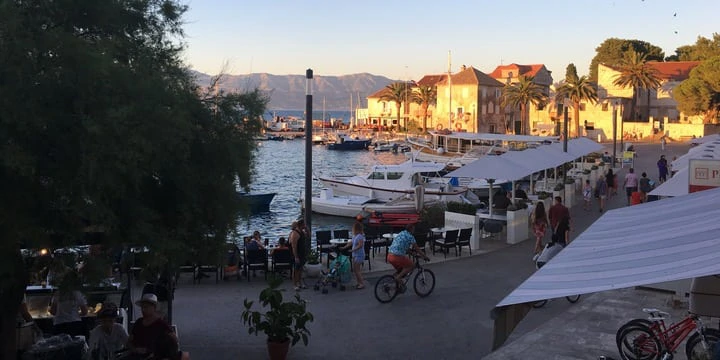
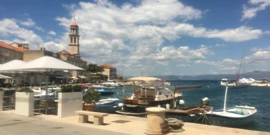
The first settlers spread from the old basilica over the surrounding hills and descended to the Sutivan bay and there raised the stone tower in the port—the 17th century Marijanović castle— thereby confirming their intention to stay.
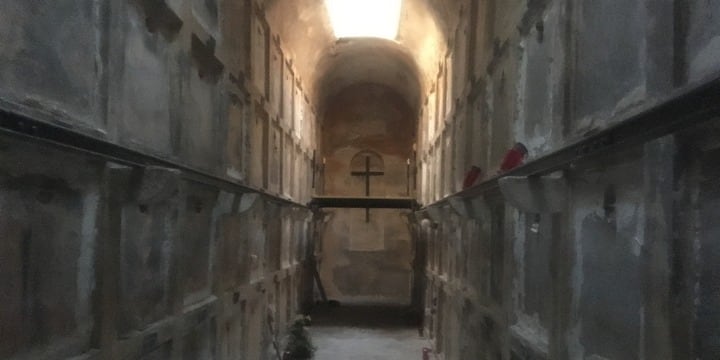
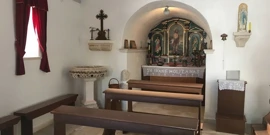
The St. Roch church also has special importance because he is Sutivan’s patron saint. In the local cemetery near the church are the famous catacombs that are still in use.
Sutivan’s economic peak was reached in the early 1900’s when it had about 2200 inhabitants. The place was a perfect blend of skilled fishermen, sailors, farmers, tradesmen, merchants and intellectuals. Their role in the development of Sutivan is still visible today, but unfortunately so are the years of the economic crisis in the early 20th century.
There was a mass exodus from the island during those years. But today, Sutivan is going down its own path to progress. With just over 800 permanent residents, some of its emigrants have return to their island home and olive groves.
Sutivan fosters close ties with his emigrant communities across the world, in Canada, the USA, Australia, New Zealand, and especially in South American continent: Chile, Argentina and Bolivia.
Most Croatian emigrants in South America come from the island of Brač. According to legend, the first Croatian immigrant in Bolivia in the late 19th century was Ivan Ivanović from Sutivan. He passed thorough the Straits of Magellan on a sailboat and arrived in the Chilean port of Antofagasta; from there he moved to Bolivia in 1885. Many people from Brač followed his lead, as well as people from Hvar and other Croatian islands.
Galerija
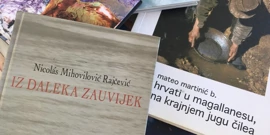
The Sutivan National Library Antonio Rendić Ivanović is implementing a project called ‘The Second Homeland’. It’s a unique literary collection devoted to the artistic and intellectual creations by Sutivan emigrants and their descendants, especially those who live and work in Chile, as well as those in other countries.
The majority of those writers and poets incorporated elements of a lost homeland into their literary works that were passed down through family memories. These elements are extremely important for ethnographic studies and the preservation of Croatian identity in the countries where Croats and their descendants live.
Vijesti HRT-a pratite na svojim pametnim telefonima i tabletima putem aplikacija za iOS i Android. Pratite nas i na društvenim mrežama Facebook, Twitter, Instagram, TikTok i YouTube!







Autorska prava - HRT © Hrvatska radiotelevizija.
Sva prava pridržana.
hrt.hr nije odgovoran za sadržaje eksternih izvora