
“From today's perspective, the current energy shock caused by the conflicts in the Middle East should have less impact on inflation growth and economic growth slowdown than the shock in 2022,” stressed on Monday the Governor of the Croatian National Bank Boris Vujčić at the Financial Forum organized by the business weekly Lider.
17:13 / 13.04.2026.
Author: Branko Lozančić
Vujčić: Current energy shock with less negative consequences than the one in 2022

Author:
Branko Lozančić
Published:
April 13, 2026, 17:13
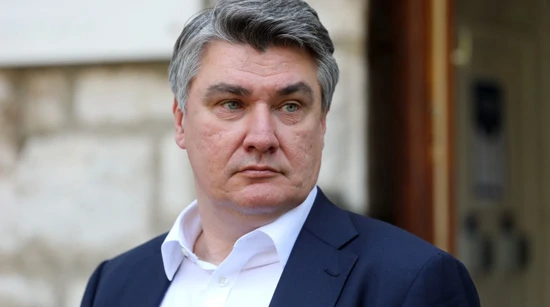
Boris Vujčić
Foto: Goran Kovacic / Pixsell
According to Boris Vujčić, the current shock should have less negative consequences also because it is occurring in different economic conditions. Namely, it comes with weaker economic growth, inflation is currently closer to its target level, and there are fewer pressures from the labor market than in 2022, which,” he said, “reduces the risks of secondary effects on inflation.”
“In addition,” said Vujčić, “the European energy system is today more resilient to shocks thanks to the diversification of energy supply and production sources.”
He emphasized that the current energy shock is still of lesser intensity, even compared to the current level of energy prices and their relative change.
“This also applies to oil price movements, and even more so to gas price movements, whose prices in 2022 have risen much more than now. In the case of oil, the similarity of the shock is greater, but the increase in prices is still less intense than it was due to the Russian aggression against Ukraine and the introduction of sanctions on the import of Russian energy products,” Vujčić said.
"We are still closest to the basic scenario"
He recalled the spring projections of the European Central Bank (ECB) and the Croatian National Bank (CNB) and elaborated scenarios of the impact of the Middle East crisis on inflation and GDP growth.
“According to energy prices from last week, which in the meantime have risen again, we are still closest to the basic scenario,” he pointed out. We are not even in an unfavorable, much less in an extremely unfavorable scenario, anything regarding oil, anything regarding gas. And that is good news,” he said.
He said that the current situation is also a consequence of the currently agreed two-week truce between the US and Iran. “But if war operations are renewed and there is an escalation, then it would certainly affect the market,” warned Vujčić.
Let us remind you that according to the basic scenario of the ECB, inflation in the Eurozone should amount to 2.6 percent this year, and economic growth to 0.9 percent. According to the CNB's basic scenario, inflation in Croatia in 2026, measured by the national index, should accelerate to 4.4 percent, while GDP should amount to 2.6 percent.
Of course, the "unfavorable" and "significantly unfavorable" scenarios of the ECB and the CNB, in the event of an escalation of the conflict in the Middle East, predict a more significant drop in GDP and an even stronger increase in inflation.
Ćorić: Today, the Croatian economy is significantly more resistant to shocks
When asked by a journalist whether Croatian citizens should be worried about a possible further increase in fuel prices, Finance Minister Tomislav Ćorić answered in the negative. He said that the Croatian economy today is much more resistant to shocks than ten years ago, noting that it will grow much more than the EU average this year.
“We believe that this crisis in the Middle East will end very soon and that the whole of Europe will come out of this state of shock caused by energy prices,” said Deputy Prime Minister and Minister of Finance Ćorić.
Asked about the amendments to the VAT Act, which were submitted for public consultation on Friday, Ćorić said that the Government thus wants to open space for a reaction if there is a possible further escalation of the conflict in the Middle East and an even stronger rise in energy prices.
Namely, legal changes and the introduction of the so-called "floating" VAT would allow the Government to potentially reduce the tax rate on petroleum products, by a maximum of ten percentage points, but this is a tool that would be used in a last resort, and not immediately after the amendments to the law are passed.
“Another tool for intervening in fuel prices is European excise duties, and there is already intensive communication with the European Commission about this,” Ćorić added.
Perko: Interest rates in Croatia are among the lowest in the EU
The Director of the Croatian Banking Association, Tamara Perko, stated that the situation is extremely uncertain due to the conflict in the Middle East, that it can be heard more and more loudly that the ECB could start raising interest rates again, but she also reminded that in the previous cycle of their growth, this influence in Croatia was limited.
“So, if there are negative or extremely negative scenarios, we expect that we will still be able to partially amortize this increase in interest rates,” said Perko.
Governor Vujčić also said in his presentation that the markets expect multiple increases in key ECB interest rates, while Perko, on the other hand, pointed out that interest rates in Croatia are among the lowest in the EU, with the fourth lowest in the corporate lending segment and the sixth lowest in Europe for housing loans.
“We can say that the Croatian market is highly liquid and highly competitive, and that is why we manage to maintain lower interest rates,” said Perko.
Source: HRT
Vijesti HRT-a pratite na svojim pametnim telefonima i tabletima putem aplikacija za iOS i Android. Pratite nas i na društvenim mrežama Facebook, Twitter, Instagram, TikTok i YouTube!



Autorska prava - HRT © Hrvatska radiotelevizija.
Sva prava pridržana.
hrt.hr nije odgovoran za sadržaje eksternih izvora