
Croatia is currently the first in the Central and Eastern European region in terms of annual growth rate of data center capacity, and it has several advantages in this sector that it should further exploit in the future, it was said on Tuesday at the Croatian Data Center Summit 2026.
17:42 / 12.05.2026.
Author: Branko Lozančić
Croatia is the fastest growing data center market in the region

Author:
Branko Lozančić
Published:
May 12, 2026, 17:42
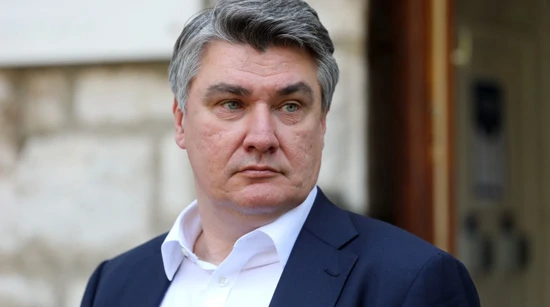
Minister Damir Habijan at the summit
Foto: Luka Antunac / Pixsell
As highlighted at a conference organized by the Croatian Data Center Association (HRDCA), European investments in data centers by 2031 are estimated at 176 billion euros, and Croatia is currently the first in the Central and Eastern European region in terms of annual capacity growth rate, which is 30 percent. According to a report by the European Data Center Association (EUDCA), it is followed by Poland with 15 and Romania with 14 percent.
HRDCA President Goran Đoreski said that Croatia has a position that it should try to exploit, and speaking about its advantages, he first emphasized peace and security, which is also important in the context of current events in the world.
“Often, when there are conflicts, data centers are also targets. We do not have to deal with these problems,” he said.
Croatia's advantages compared to a good part of Southeast Europe include membership in the European Union, the Schengen zone and the euro area.
“Among other things,” according to Đoreski, “an opportunity is also the fact that in developed markets in Western Europe there is less and less available energy, so it is already very difficult to build a data center in some very developed cities.”
He pointed out that currently practically all services used for business and private purposes, both in Croatia and in Southeast Europe, are actually mainly provided from Western Europe.
“Only by transferring services that are currently located in Western Europe and servicing Southeast Europe, could we achieve exponential growth of our market without doing anything else. And that is what we must strive for. We must not close ourselves off within our own borders,” Đoreski said.
Speaking about Croatia's shortcomings, he emphasized, among other things, the relatively poor understanding of the data center industry.
Habijan: Six data center projects currently under development in Croatia
Minister of Justice, Administration and Digital Transformation Damir Habijan stated that there are around 70 data centers in Croatia, most of them public, 22 private, with a total area of around 18,000 square meters and an installed capacity of 20.7 megawatts (MW).
At the moment, there are six data center projects in Croatia that are in the development or construction phase, with an additional capacity of 14 MW, and according to Habijan, they testify to the great desire of private partners to invest in such centers in Croatia.
When asked by journalists, the minister did not reveal more details about the projects, only saying that they do not include the recently announced project to build a data center in Topusko.
Habijan pointed out that intensive work is being done on the digitalization of public administration, with the goal that by 2030 all services to citizens and companies will be available online, which is also generating a growing need for data centers. He singled out the e-Citizens project, which currently has around 2.2 million users and provides almost 120 services, saying that it "shows that we are going in the right direction".
He dedicated part of his presentation to the issue of European regulation in the field of digital technologies. Despite the digital "omnibus" that aims to simplify regulations, the minister criticized the European Commission for its "rather slowness" in adopting it, given the speed of changes in the sector.
“In terms of the normative framework, the state should be a partner, because excessive regulation must not "kill" innovation and research and encourage non-competitiveness in relation to China and the USA,” he said.
Habijan also emphasized the importance of digital sovereignty because "if a state wants to say it is sovereign" it must take care of its digital infrastructure as well as its data.
When it comes to data centers, he said that perhaps the biggest limitation may be energy.
“We absolutely have to talk about this issue, it must not be a taboo topic, especially in light of some new announced investments,” he said.
Source: HRT
Vijesti HRT-a pratite na svojim pametnim telefonima i tabletima putem aplikacija za iOS i Android. Pratite nas i na društvenim mrežama Facebook, Twitter, Instagram, TikTok i YouTube!







Autorska prava - HRT © Hrvatska radiotelevizija.
Sva prava pridržana.
hrt.hr nije odgovoran za sadržaje eksternih izvora