
The legislative framework required for the introduction of compulsory military service should be presented in June and adopted by Parliament in October this year, which means that the training of the first conscripts in the barracks in Knin, Slunj and Požega will begin at the end of this year or at the latest at the beginning of next year, learned the HINA news agency.
14:04 / 18.04.2025.
Author: Branko Lozančić
Military service: Training of first conscripts at the end of the year or early 2026

Author:
Branko Lozančić
Published:
April 18, 2025, 14:04
Illustration
Foto: Ivica Galovic / PIXSELL
Everything is ready to begin training in the barracks in Knin, Slunj and Požega, but it is necessary to amend the legislative framework that introduces compulsory basic military training. It will also be adopted this year. More or less everything has been agreed, but the details of civilian service for those who are conscientious objectors are still being "fine-tuned", according to unofficial information from the Government.
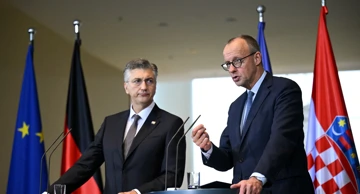
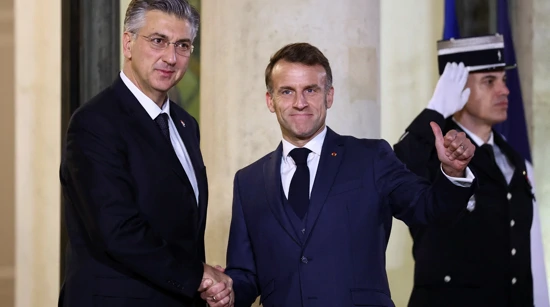
Namely, a meeting between Prime Minister Andrej Plenković and the ministers of defense, interior and foreign affairs, as well as representatives of the Armed Forces, was held at the government building earlier this week, from which two documents were sent to the President of the Republic and Supreme Commander Zoran Milanović - drafts of the Defense Strategy and the Long-Term Development Plan of the Armed Forces, with a proposal to discuss these documents at a session of the Defense Council.
In addition, it is learned that a workflow for the activities of amending the Defense Act and the Act on Service in the Armed Forces was agreed upon at the meeting.
The plan is to submit the amendments to the Defense Act, which reintroduce mandatory military service, for public consultation in June, for the first reading to be discussed in Croatian Parliament by the summer recess, until July 15, then for the second reading in September, and for the Act to be voted on in October.
“The first conscripts will begin training in the barracks at the end of this year or at the latest at the beginning of next year,” HINA was told.
Mandatory basic military training will last two months, for which conscripts will receive a monthly salary of 1,100 euros net, plus accommodation and food. The training will be recognized as work experience and will also be taken as an advantage when employed in state and public services, which should be a motivating aspect of military service.
Employees will not be allowed to be dismissed from their jobs while serving military training, and students will be able to get a deferral during their studies, at the latest until the age of 29.
Those who refuse to serve military training will have two options, according to the current plan. They will be able to undergo three months of training through the Civil Protection system to act in crisis situations, such as fires, floods, earthquakes, or work for four months for local government (municipality, city or county) on communal services for eight hours a day.
The compensation will be significantly lower, but all the details regarding civilian service have not yet been finalized.
The state will send out five drafts for basic military training each year for 800 conscripts, which would be 4,000 conscripts annually.
Source: HRT/HINA
Vijesti HRT-a pratite na svojim pametnim telefonima i tabletima putem aplikacija za iOS i Android. Pratite nas i na društvenim mrežama Facebook, Twitter, Instagram, TikTok i YouTube!











Autorska prava - HRT © Hrvatska radiotelevizija.
Sva prava pridržana.
hrt.hr nije odgovoran za sadržaje eksternih izvora